
Dry · All-purpose mayfly
× 2Parachute Adams #14
Dead-drift it through riffles and seams. The best all-round searching dry when you can’t tell what fish are eating.

Two of each of our 40 core patterns: every dry, nymph, wet fly and streamer in the Yellowstone lineup. Enough to cover most trout water from spring to fall.
The Ultimate Fly Box holds two of every pattern in our Yellowstone lineup: 20 dry flies and 20 nymphs, wet flies and streamers, in sizes #8 to #16. It covers mayflies, caddis, stoneflies, hoppers and beetles, midges, scuds, worms and eggs, plus the classic attractors and Woolly Buggers.
We chose these 40 patterns for the rivers around Yellowstone National Park, from the Henry’s Fork to the Madison and the Yellowstone. They work just as well on trout water across the country, and the same patterns catch fish in spring creeks, freestone rivers, tailwaters and lakes.
For newer anglers, the Ultimate Fly Box is a complete starter kit. Experienced anglers use it to restock or as a travel box for a new river. It also makes an easy gift, since you don’t need to know what they fish.
40 patterns · 80 flies. Tap a photo to see it larger.
Dead-drift it through riffles and seams. The best all-round searching dry when you can’t tell what fish are eating.
Fish it on cool, overcast afternoons when small olive mayflies are on the water. Great as a visible lead fly with a nymph dropper.
Match pale yellow mayflies on summer mornings. Drift it drag-free over rising fish in slower water.
Slap it down tight to grassy banks in late summer and fall. Floats high enough to hold up a nymph dropper.
A big mayfly for early-summer drake hatches. Fish it in the afternoon when large duns are on the water.
For fish sipping midges in slow water. Fish it on a fine tippet and watch for gentle rises.
Dead-drift it or give it a twitch for darker caddis. Best on evenings and in faster water.
Match olive-bodied caddis. Skate or twitch it during egg-laying flights at dusk.
The most common caddis color. Fish it in riffles and pocket water through summer.
Spun deer hair floats like a cork. Ideal for fast water and for holding up a dropper.
Imitates a caddis stuck in the film while emerging. Deadly on flat water when fish refuse high-riding dries.
A classic caddis profile. Fish it at dusk and skitter it across the surface.
The biggest bug of the year. Bang it against the banks during the early-summer salmonfly hatch.
Follows the salmonfly hatch. Fish it along banks and willows, often with a nymph dropper.
Small yellow stoneflies hatch through summer. A good afternoon pattern in riffles.
Terrestrials fall in from late summer through fall. Fish it under overhanging trees and along banks.
A classic high-floating attractor for fast water and curious fish. Easy to see.
A buggy attractor that suggests stoneflies and hoppers. Floats well in rough water.
A two-hackle attractor that can be fished dry or swung wet. Good on small streams.
A bright attractor for when fish are looking up and nothing specific is hatching.
A heavy, flashy nymph that sinks fast. The classic dropper under a hopper.
Red catches attention in off-color water. Fish it deep under an indicator.
Green suggests caddis larvae. Fish it in riffles near the bottom.
A darker option that suggests stonefly and mayfly nymphs. Good in clear water.
Imitates mayfly nymphs, a trout staple all year. Fish it as a dropper or under an indicator.
A flashy attractor nymph that triggers strikes. Fish it in deeper runs.
A buggy general nymph that suggests mayflies and caddis. A great first nymph to try.
Flash draws fish in dirty water and low light. Fish it as a dropper.
Midges hatch year-round. Fish it under an indicator in tailwaters, lakes and slow runs.
Red imitates bloodworm larvae. Deadly in tailwaters and lakes.
A heavy, slim midge larva that gets down fast. Fish it near the bottom in tailwaters.
A big, heavy point fly. Stonefly nymphs live in rivers year-round, so it works any season.
Imitates freshwater shrimp. Fish it near weed beds in lakes, spring creeks and tailwaters.
Imitates the caddis pupa rising to hatch. Swing it at the end of the drift or fish it as a dropper.
The soft hackle pulses in the current. Swing it across and down during a hatch.
Aquatic worms wash in after rain and high water. Fish it under an indicator.
Imitates a drifting fish egg. Fish it below spawning areas in spring and fall.
Imitates leeches and baitfish. Strip it in lakes or swing it in rivers.
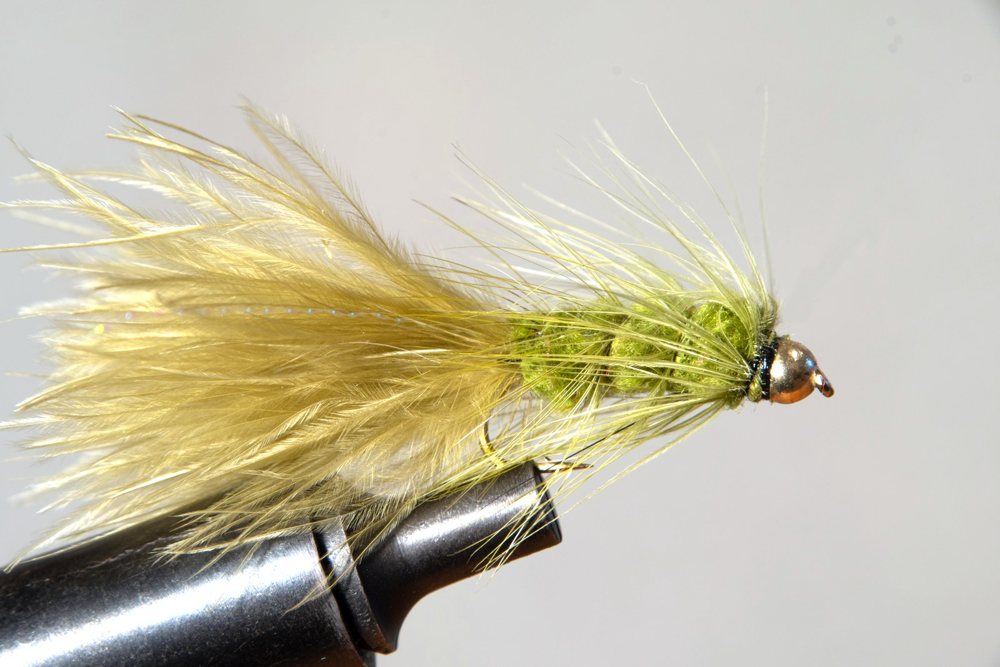
The red head adds a hot spot. Strip it for aggressive trout in lakes and rivers.
Swing or strip it through deep runs to trigger bigger trout.
Sizes #8 to #16. The big stoneflies, hoppers and streamers are #8–10, and most mayflies, caddis and nymphs are #14–16.
Yes. It covers the main foods trout eat, so a beginner can match nearly any situation without guessing which flies to buy.
Yes. These are proven trout patterns that catch fish on rivers and lakes across the country.
Yes. All 80 flies come packed in a fly box that’s yours to keep.


 Your mix